
Plasma Fibroblasting
Fibroblasting: Knees
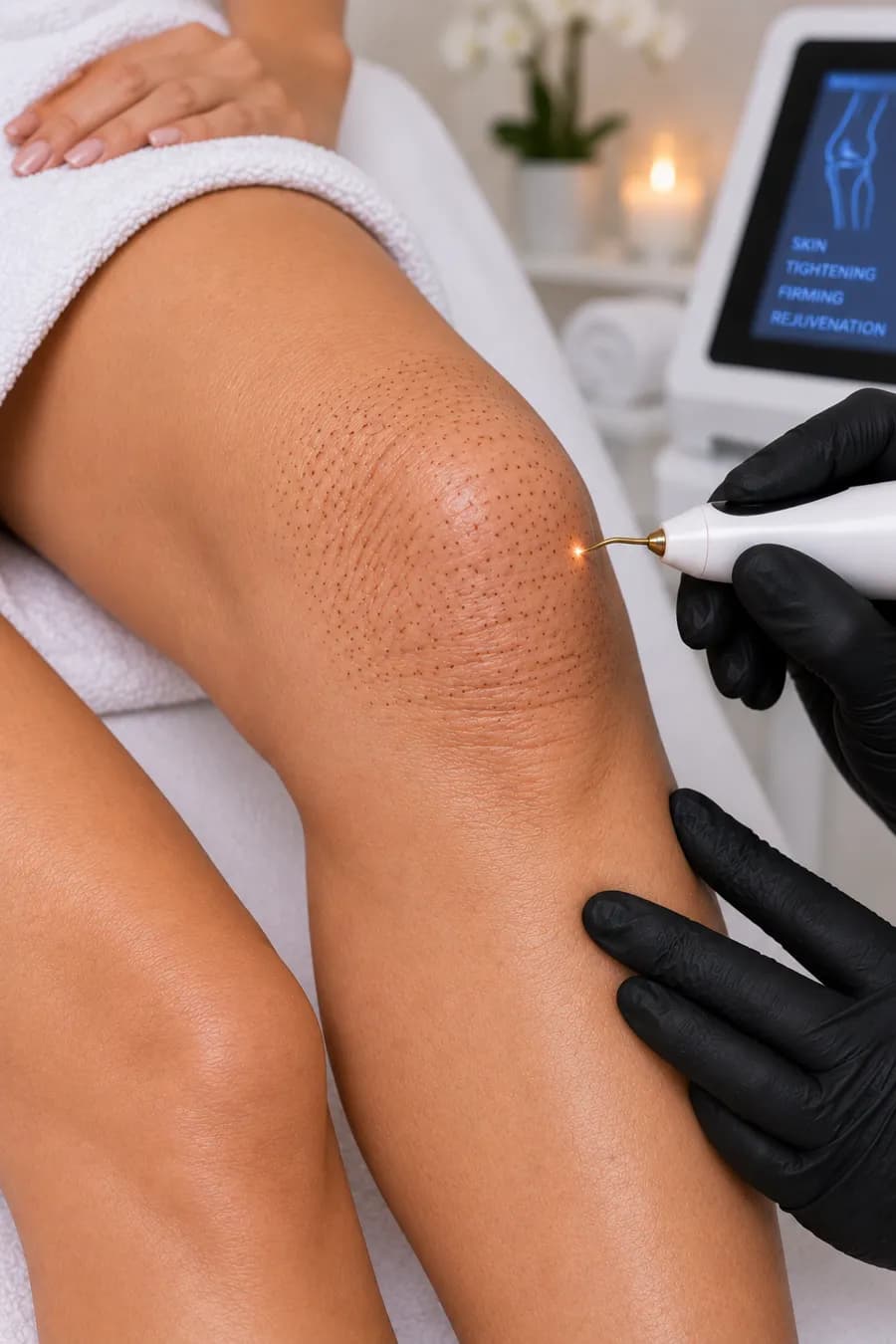
Knee lift and skin tightening for the area above the knee.
From R 2 500. Prices are a guide and are confirmed at consultation. Area, complexity and the number of sessions can change the final charge.
At a glance
- Appointment
- 1.5–2 hours
- Downtime
- Plan for recovery
- Suggested course
- 2–3 sessions, 8–12 weeks apart
- Consultation
- Required first
What it is
Treatment of the skin above the knee, an area where laxity often shows earlier than people expect. Plasma fibroblasting is a non-surgical treatment that uses controlled heat to create tiny points across the skin surface, prompting the skin's own tightening response over the weeks that follow.
How it works
A handheld device creates a series of tiny, controlled points on the skin surface without touching it. The skin responds to those points through its own repair process, which is what draws the surrounding tissue in over the following weeks. Nothing is cut and nothing is injected.
Good fit for
- Loose-looking skin above the knee
- Firmness changes after weight loss
- Mild to moderate laxity
Suitability is assessed individually at consultation. Some treatments are not appropriate for everyone.
Your treatment journey
- Consultation and suitability assessment. This treatment is not appropriate for everyone, and your skin tone, health and medication are all part of that decision.
- Photographs and a treatment plan, including how many sessions the area is likely to need.
- Numbing cream applied and given time to work properly before the session begins.
- The treatment itself, working across the area in sections.
- Healing across one to two weeks of visible crusting, then several weeks of continued change beneath the surface.
- A review appointment at around eight to twelve weeks before deciding on any further session.
Results and what to expect
Change is gradual. The area looks worse before it looks better — crusting, then weeks of pinkness — and the actual result develops across roughly eight to twelve weeks as the skin completes its response. Some areas need more than one session. Results vary considerably between individuals and depend on your skin, age, health and aftercare.
Safety and common effects
Most people notice some of the following. They are temporary and expected rather than a problem:
- Small dark crusts across the treated area, which must be left alone to fall away naturally
- Swelling for two to five days, often most noticeable on the second morning
- Redness or pinkness of the area for several weeks after the crusts have gone
- Temporary darkening or lightening of the skin in the treated area
Before you book. Suitability is assessed individually at consultation. Some treatments are not appropriate for everyone. Tell your practitioner about any medication, skin condition, allergy or recent treatment at consultation rather than on the day.
Information on this site is general and is not a substitute for medical diagnosis, advice or treatment. Speak to a healthcare professional about any health concern.
Aftercare
Keep the area clean and dry as instructed. Do not pick or scratch the crusts. No make-up over the area until it has fully healed, no swimming or saunas, and strict sun protection for at least three months afterwards.
Read the full preparation and aftercare guide for plasma fibroblasting.
Prices
Prices are a guide and are confirmed at consultation. Area, complexity and the number of sessions can change the final charge. Last updated 24 March 2026.
Fibroblasting: body
| Treatment | Price |
|---|---|
| Knee lift & skin tightening | R 2 500 |
Common questions
Will bending my knee affect healing?
Movement over the healing area slows things down. Avoid strenuous activity and deep bending for the first week.
Can I wear trousers?
Loose clothing is fine. Avoid anything tight or abrasive over the area while it heals.
How visible is the healing?
The crusting is visible for one to two weeks, so plan around anything where you would want bare legs.
How long is the healing, honestly?
Plan for one to two weeks where the treated area is visibly crusted and not something you would want to cover with make-up. Pinkness continues for several weeks after that. This is the part people most often underestimate, so book well away from any event.
How many sessions will I need?
Many areas need more than one, spaced eight to twelve weeks apart so the skin fully completes its response before the next. The number is estimated at consultation and reviewed as you go.
Is it suitable for all skin tones?
No. Suitability depends on your skin tone and your history of pigmentation changes, because this treatment carries a risk of temporary or longer-lasting pigment change in some skin types. This is assessed individually and honestly at consultation.
Does it hurt?
Numbing cream is applied first and given proper time to work. Most people describe heat and a stinging sensation rather than sharp pain. Tell your practitioner during the session if it becomes uncomfortable.
Can I pick the crusts off?
No — and this matters more than any other instruction. Picking is the most common cause of scarring and pigment change after this treatment. The crusts must be left to fall away on their own.
Is this the same as a surgical lift?
It is not, and it does not produce the same result. It is a non-surgical treatment intended to improve the appearance of skin laxity in a specific area. If you are considering surgery, discuss that with a medical practitioner.
Ready to talk about fibroblasting: knees?
Send us a message and we will help you work out whether this is the right treatment for your goals.